Chongqing Travel Guide for Foreigners
Updated: July 25, 2026 · TravelChinaTip
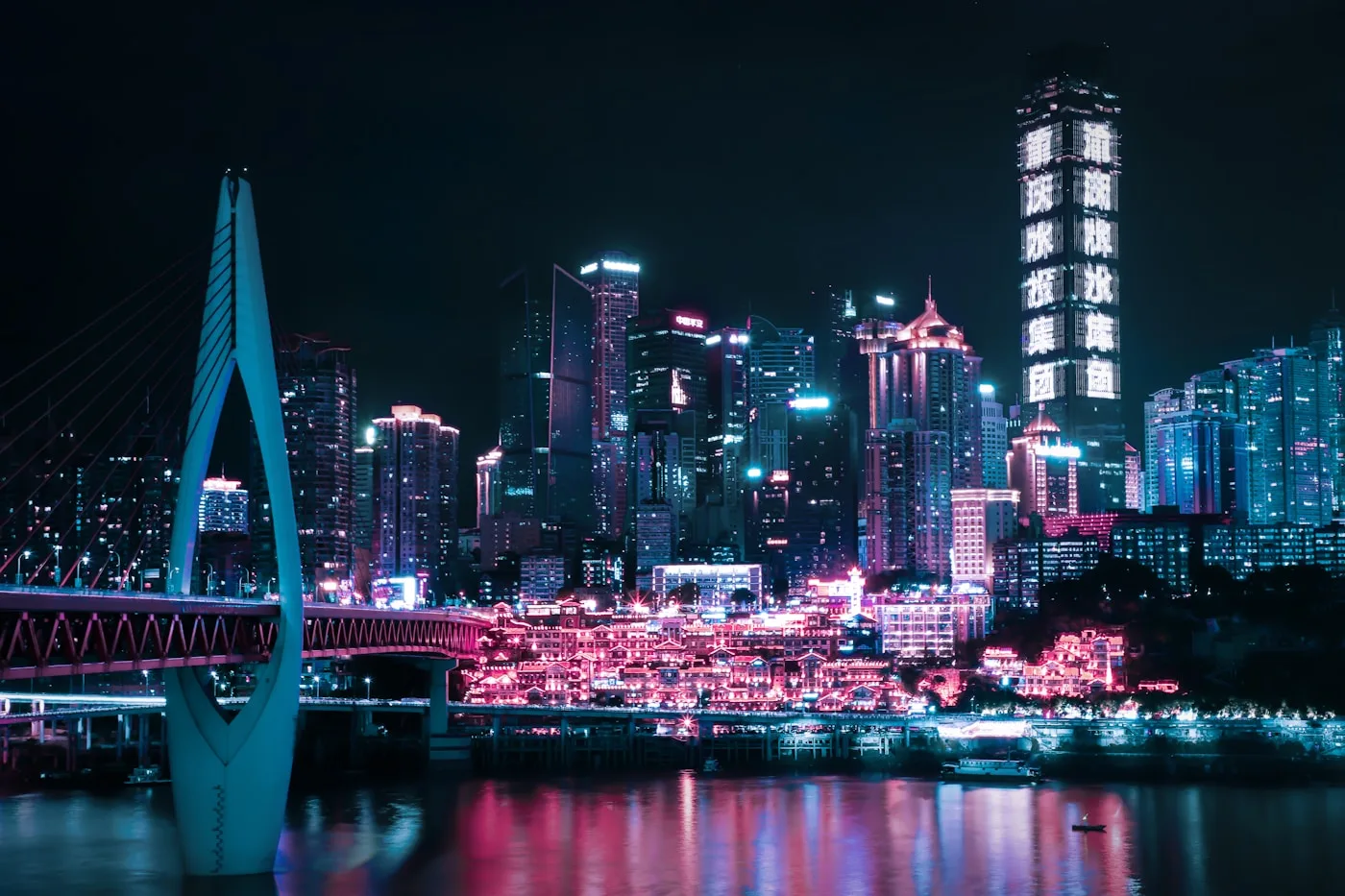
Chongqing is unlike any other Chinese city — built vertically on mountains where the Yangtze and Jialing rivers meet. Fog rolls through skyscrapers connected by escalators instead of sidewalks; the world's longest monorail runs through residential buildings; and the food is the spiciest, most addictive in China. Chongqing hotpot originated here (not Chengdu), and the city's "8D magic" went viral globally for good reason. Foreign travelers use Chongqing as a gateway to Yangtze Three Gorges cruises and as a food pilgrimage before heading to Chengdu or Guilin.
Best Time to Visit
March through May and September through November are most comfortable — less fog, moderate heat. Chongqing is one of China's "furnace cities" — summer (June–August) regularly exceeds 38°C with oppressive humidity. Locals joke that Chongqing has four seasons: all hot. Winter is foggy and damp (10–15°C) but atmospheric for hotpot. The city nickname "Fog Capital" (雾都) means clear panoramic views are rare year-round — embrace the moody atmosphere. Avoid Golden Week when Hongyadong is shoulder-to-shoulder.
3-Day Sample Itinerary
Day 1 — City Icons
Morning: Jiefangbei (解放碑) central square — the "People's Liberation Monument" marks old downtown. Walk to Hongyadong (洪崖洞) stilt-house complex (free entry) — 11 stories of shops and restaurants built into a cliff face. Best photographed from Qiansimen Bridge at dusk when lights turn on (around 7:30 p.m.). Afternoon: ride the Liziba monorail station where the train passes through a residential building (Line 2). Take the Crown Great Escalator (皇冠大扶梯) — 112 meters, Asia's second-longest — for ¥2. Evening: hotpot is mandatory. Qiqi (珮姐) or Dezhuang (德庄) chains have English menus; request a yuanyang (half spicy, half mild) pot.
Day 2 — History & Views
Morning: Three Gorges Museum (free, closed Mondays) — excellent introduction before a Yangtze cruise. Adjacent: People's Great Hall (人民大礼堂), Chongqing's iconic round building modeled on the Temple of Heaven. Afternoon: Ciqikou Ancient Town (磁器口) — Ming-era trading port on the Jialing River, 30 minutes by metro. Narrow lanes, chili sauce workshops, and chen mahua (fried dough twists). Try ma la xiao mian (numbing-spicy noodles) at a local shop. Evening: Nanbin Road riverside promenade for night views across both rivers.
Day 3 — Yangtze or Departure
Option A: Board a Yangtze Three Gorges cruise (typically 4 days downstream to Yichang, or upstream from Yichang). Book through Trip.com or a specialist agency — include airport/station transfers. Option B: Day trip to Wulong Karst (武隆) — natural bridges and sinkholes (UNESCO), 2 hours by train. Featured in Transformers: Age of Extinction. Option C: High-speed train to Chengdu (1 hour, ¥150) if continuing southwest. Chongqing West and North stations serve most G-trains.
Local Transportation Guide
Chongqing Jiangbei Airport (CKG) connects via Metro Line 10 and airport buses. The city has two major rail stations — Chongqing West (重庆西) and Chongqing North (重庆北) — do not confuse them; they are 30 minutes apart. Metro is the backbone: Lines 1, 2, 3, 6, and 10 cover downtown, but stations often have multiple exits spread across different building floors — follow signs carefully. Unique features: Yangtze cableway (长江索道, ¥20 one-way) crosses the river with skyline views; escalators replace hills (Huangjuewan escalator, 90 meters). DiDi is essential — addresses in Chongqing include floor numbers because buildings span multiple street levels. Walking distances on maps are deceptive due to elevation changes.
Foreigner-Friendly Food Guide
Chongqing is the birthplace of ma la hotpot — numbing Sichuan peppercorn plus chili oil in a bubbling cauldron. Order a yuanyang pot (half clear, half spicy) if you are new. Dip raw ingredients (thin beef, duck intestine, tofu skin, lotus root) into the broth and coat in sesame oil to tame the heat. Beyond hotpot: Chongqing xiao mian (小面, breakfast noodles), suanlafen (酸辣粉, hot-and-sour glass noodles), and kung pao chicken (宫保鸡丁, allegedly invented here). Street food at Bayi Road (八一路) food street is cheap and intense. Chains like Haidilao offer patient service for foreigners. Say "wei la" (微辣, mild) — Chongqing mild is still hotter than most Western "spicy."
Ticket Booking Tips
Hongyadong and Ciqikou are free. Yangtze cableway: buy at the station (expect 30–60 min queues on weekends; go before 10 a.m.). Three Gorges Museum: free, passport required. Wulong Karst: ¥125 including shuttle bus; book on Trip.com or at the visitor center. Yangtze cruises: book 2–4 weeks ahead for peak season (April–May, September–October). Prices range ¥1,500–5,000 for 4-day cruises depending on cabin class. Hotpot restaurants do not need reservations on weekdays; book Haidilao via their app on weekends.
Travel Do's & Don'ts
- Do eat hotpot on Day 1 — it defines the Chongqing experience.
- Do carry your hotel address in Chinese — taxi drivers navigate by landmarks, not street numbers.
- Do visit Hongyadong at night — the daytime view is underwhelming compared to lit-up evening.
- Do confirm which train station your ticket specifies — missing a train due to wrong station is a common mistake.
- Don't underestimate walking distances — a "5-minute walk" on the map may involve 200 stairs.
- Don't skip sesame oil at hotpot — it cools and coats your stomach; dry spicy broth alone will overwhelm most foreigners.