How to Book China Train Tickets on Trip.com
Published: July 16, 2026 · Updated: July 28, 2026 · TravelChinaTip
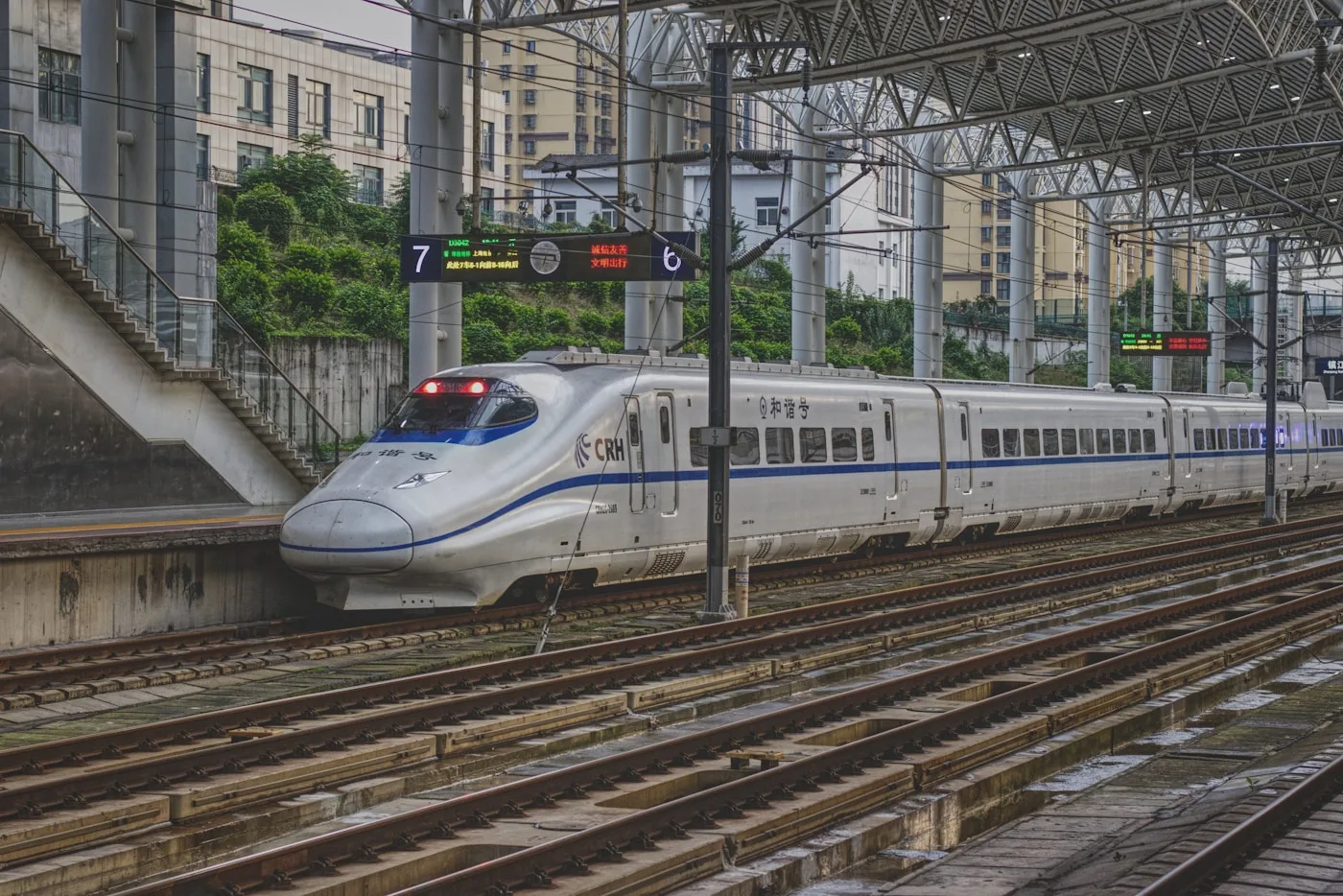
Short answer: yes — foreigners can book China high-speed trains on Trip.com with a passport and an international card. Tickets usually open about 15 days ahead; at major stations you board by scanning that same passport. This guide walks through booking, seat classes, station flow, refunds, and when official 12306 is worth the hassle.
Trip.com (formerly Ctrip) is the easiest English path for first-time visitors. The official railway app, 12306, sells at face value but is built for residents: more Chinese UI and historically harder passport/ID verification. Trip.com adds a small service fee and removes most of that friction.
Trip.com vs. 12306: Which Should You Use?
12306 is the state railway's own platform, so its tickets are sold at face value with no markup, and its inventory is the true source. The catch is the account setup and passport verification, which can stall foreign travelers. Trip.com resells the same seats with a small service fee, but removes the friction. For a two-week trip with a handful of train legs, the convenience is usually worth the few dollars per ticket. If you are staying longer and taking many trains, learning 12306 can save money.
Step-by-Step Booking
- Download Trip.com or use trip.com in a browser. Create an account with your email.
- Search your route (for example "Beijing to Xi'an") and select a date. Tickets typically open 15 days in advance on Trip.com, and further out during some peak periods.
- Choose a train. G-trains are the fastest bullet trains; D-trains are slightly slower and a little cheaper; C-trains are short intercity hops.
- Select a seat class (see the comparison below). Second class is the best value and perfectly comfortable.
- Enter passenger details exactly as on your passport: full name, passport number, nationality, date of birth. A mismatch can stop you at the gate.
- Pay with an international credit card or PayPal. High-speed fares are fixed by distance, so there is no dynamic pricing.
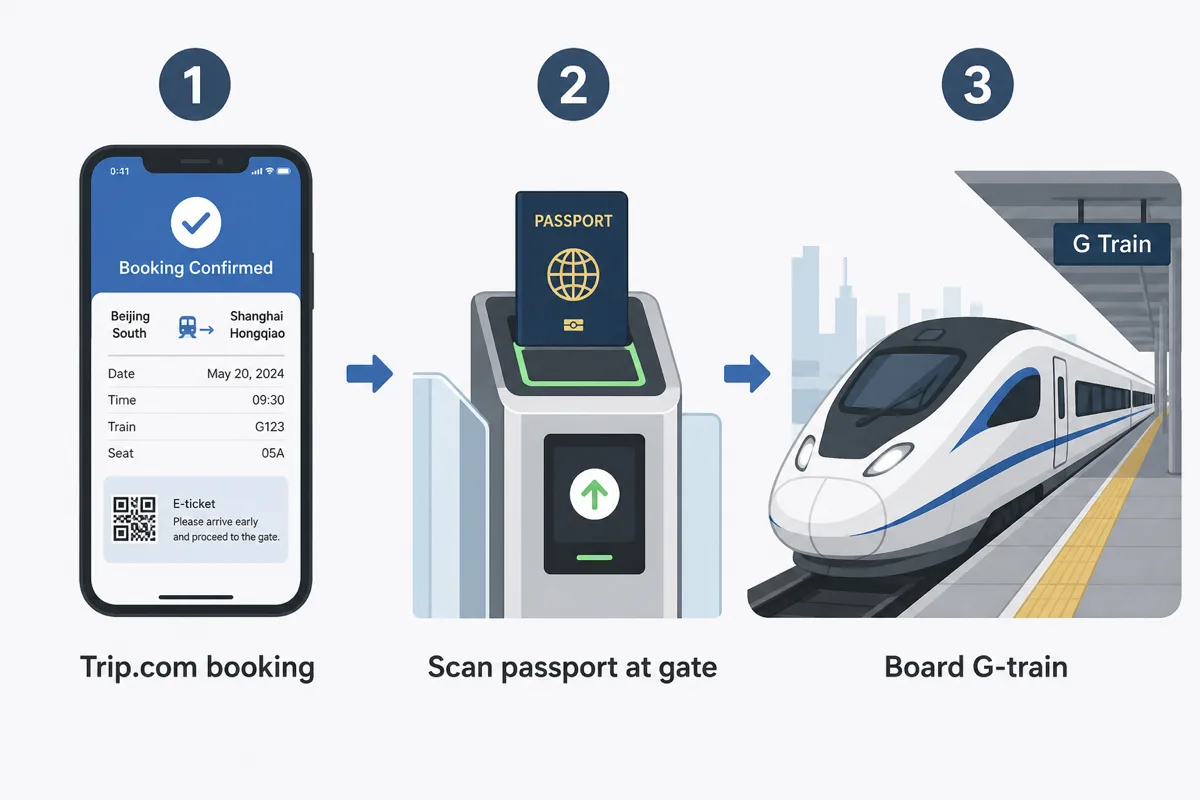
- Receive a confirmation with a booking number. At most stations you now scan your passport at the gate directly; older or smaller stations may need a paper ticket from a counter or machine.
Seat Classes Compared
| Class | Layout | Relative price | Best for |
|---|---|---|---|
| Second class | 5 across (3+2) | Baseline | Almost everyone; great value |
| First class | 4 across (2+2) | ~1.5–1.8× | Long legs, more legroom |
| Business class | 3 across (2+1), reclining | ~2.5–3× | Splurge on 5+ hour routes |
On busy holiday routes, buy as soon as the window opens; popular trains sell out. If second class is gone, first class is a modest step up in price and often still available.
At the Station
Arrive 45–60 minutes early, more at giant hubs. Chinese stations are airport-sized, with security screening at the entrance. Once inside, find your train number on the departures board and head to its waiting area; the platform gate opens about 15 minutes before departure and closes a few minutes before, so do not cut it fine.
At major stations such as Beijing South and Shanghai Hongqiao, you scan your passport at the gate and walk straight through. If your passport will not read, staff at the manned lane will check you in against your booking.
Luggage, Food, and Onboard Comfort
There are no strict weight limits like flights, just overhead racks and space at carriage ends for big cases. Trains have clean toilets, hot-water dispensers for tea and instant noodles, and a trolley or dining car selling snacks and boxed meals. Bring your own food for long legs; station options are better than onboard ones. Power outlets are at every seat in first and business class and at most second-class seats on newer trains.
Refunds and Changes
Refunds are available through Trip.com, with a fee that rises as departure approaches, so cancel early if plans change. You can usually switch to a different train, subject to availability, either in the app or at a station counter. If your schedule is uncertain, book flexible or refundable fares.
Mistakes That Block You at the Gate
Enter your name exactly as on the passport — skipping a middle name is a common reason the automatic gate rejects the scan. Book the correct station pair (Shanghai Hongqiao vs Shanghai Station; Beijing South vs Beijing West). Arrive early: Chinese hubs feel like airports, with security at the entrance and platform gates that close minutes before departure.
If second class sells out on a holiday week, check first class or a train 30–60 minutes later before giving up. For day trips such as Hangzhou or Suzhou, lock the return train when you buy the outbound ticket.
Popular Routes & Prices
Approximate second-class fares (they vary slightly by train):
- Beijing → Xi'an: 4.5 hrs, about ¥515
- Shanghai → Hangzhou: 1 hr, about ¥73
- Chengdu → Chongqing: 1.5 hrs, about ¥154
- Xi'an → Shanghai: 6–7 hrs, about ¥669
Wondering how rail fits your overall budget? See how much a China trip costs.
Conclusion
Book trains as soon as the window opens for popular routes and holiday travel. Trip.com removes the language and payment barriers that make 12306 frustrating for foreigners, and China's high-speed network is faster and easier than flying between most city pairs. For the full picture, read our China high-speed train guide, and set up Alipay so you can buy snacks and taxis at either end.
FAQ
Can foreigners book China train tickets with a passport?
Yes. On Trip.com you enter your passport number, nationality, and name exactly as printed, and pay with an international card. At most large stations you then scan the same passport at the gate to board, with no paper ticket required.
Is Trip.com or 12306 better for tourists?
Trip.com is easier for most visitors: English interface, foreign card payment, and no Chinese-ID account hurdle. It adds a small service fee per ticket. 12306 sells at face value but is harder to set up. For a short trip, Trip.com's convenience usually wins.
How far in advance do China train tickets go on sale?
Tickets generally open about 15 days ahead on Trip.com, and further out in some peak periods. Popular routes and holiday dates sell out quickly, so book the moment the window opens if you have fixed plans.
Which seat class should I choose?
Second class is comfortable and the best value for almost everyone. First class adds legroom for roughly 1.5–1.8× the price, and business class fully reclines for about 2.5–3×, worth considering only on long five-hour-plus legs.
Can I get a refund if my plans change?
Yes, through Trip.com, with a cancellation fee that increases closer to departure. You can also change to another train subject to availability. Book flexible fares if your itinerary is uncertain.
Do I need a paper ticket for China high-speed trains?
Usually no at major stations. Scan the same passport you used on Trip.com at the automatic gate. Older or smaller stations may still print a paper ticket at a counter or machine — arrive early if your station is unfamiliar.
What name should I enter when booking on Trip.com?
Enter your full name exactly as printed on your passport, including middle names if shown. A mismatch between the booking and the passport chip/MRZ is a common reason the gate rejects a scan.