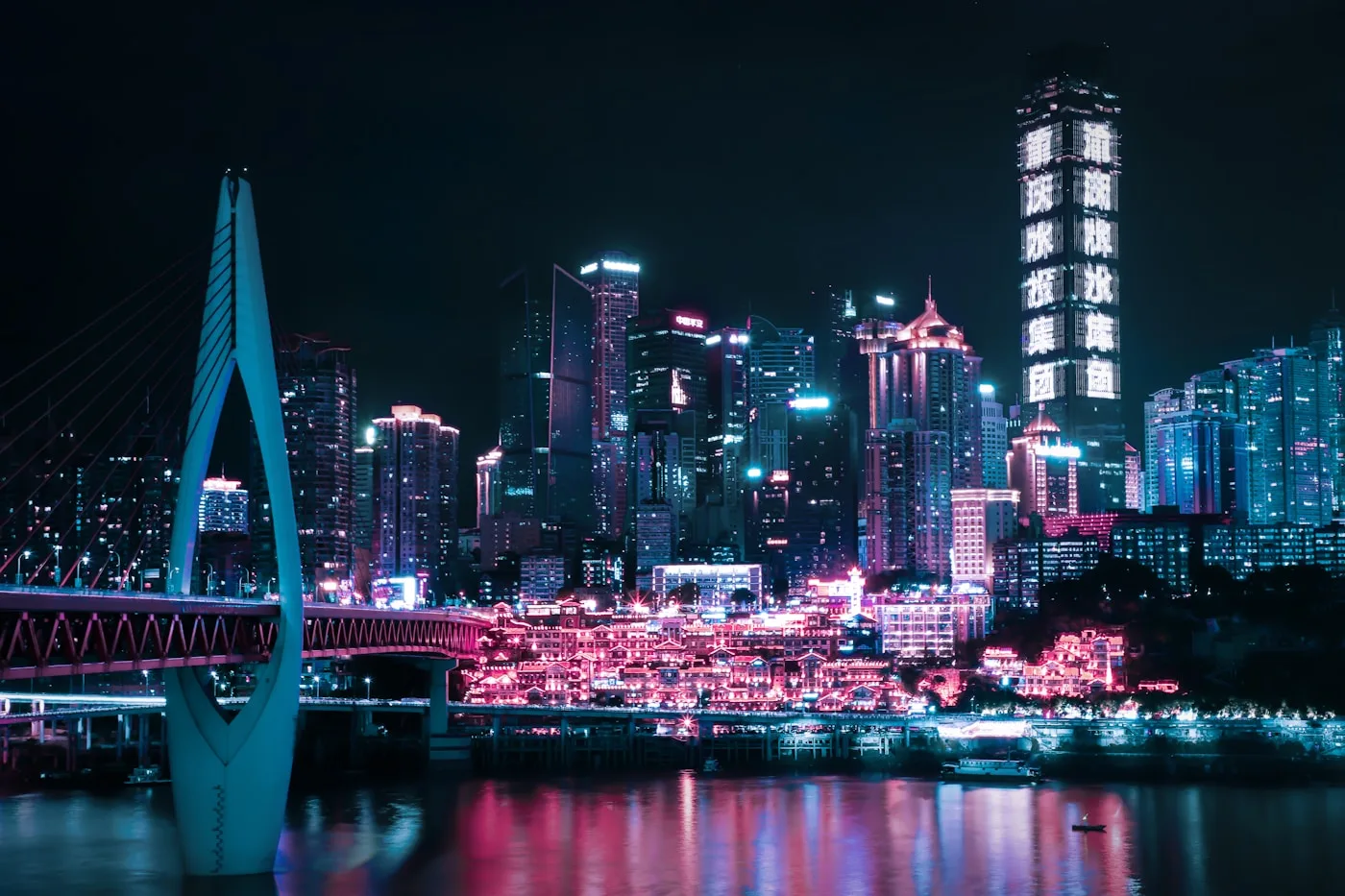
Among Gen Z feeds in late 2025 and early 2026, Chinamaxxing stopped being a niche joke and became a recognizable mood: thermos water instead of iced lattes, indoor slippers, hotpot nights, awe at Chongqing’s stacked highways, and the caption “you met me at a very Chinese time in my life.” NPR, Newsweek, BBC, and The New York Times all treated it as a real cultural moment — not just another TikTok week.
For travelers, though, the interesting question is not whether the meme is “valid.” It is what the checklist gets right about daily life in China, where it flattens a huge country into a costume, and how to turn that curiosity into a trip that does not fall apart at the first QR code.
What Does Chinamaxxing Mean?
Chinamaxxing (also spelled Chinesemaxxing, and overlapping with “becoming Chinese”) takes the internet suffix -maxxing — as in looksmaxxing or healthmaxxing — and applies it to China. In plain English: maximize your China-coded habits and aesthetics.
In practice it usually means one or more of these:
- Lifestyle cosplay: hot water instead of iced coffee, slippers indoors, rice/soup/hotpot routines, TCM-adjacent skincare chatter.
- Soft-power fandom: praising high-speed rail, dense metros, cashless cities, or nightscapes from Chongqing and Shanghai.
- Ironic identity play: captions like “I’m in my Chinese era” or “you met me at a very Chinese time in my life” (a Fight Club parody that went viral on X in 2025).
- Consumer bridge: interest in Chinese fashion labels, Labubu-era collectibles, Luckin/Mixue aesthetics, or shopping tips that point toward Taobao-style sourcing.
Wikipedia files the broader phenomenon under Becoming Chinese; mainstream coverage from NPR, Newsweek, BBC, and The New York Times treated it as a real Gen Z cultural moment — not only a niche meme.
How Did Chinamaxxing Start?
There was no single inventor. The phrase layered onto several 2025–2026 moments:
- High-visibility China trips — creator travel that framed Chinese cities as modern and entertaining (widely cited: IShowSpeed’s 2025 China streams; later commentary trips by other influencers).
- The catchphrase — “you met me at a very chinese time in my life” (April 2025) gave the vibe a shareable punchline.
- Diaspora instruction manuals — Chinese American creator Sherry Zhu’s tongue-in-cheek “how to become Chinese / Chinese baddie” videos pulled tens of millions of views and taught a repeatable checklist.
- Platform spillover — TikTok politics, Xiaohongshu (RedNote) curiosity, and short-form city porn made “everyday China” feel newly accessible to Western feeds.
By early 2026 the joke had enough density that journalists stopped asking “is this real?” and started asking “what does it mean?” That is usually the peak of a meme’s cultural shelf life — and the moment travel curiosity spikes.
The Chinamaxxing Checklist — and the Travel Reality Behind It
TikTok compresses culture into props. Some props map onto real daily life in China; others are aesthetic shorthand. Here is a clearer split for travelers:
| Trend habit | Real in China? | Traveler takeaway |
|---|---|---|
| Drink hot / warm water | Common (thermos culture, tea, hotel kettles) | Useful: boiled water culture is real; do not drink untreated tap water — see tap water guide. |
| Indoor slippers | Very common at home | Hotels may provide slippers; remove outdoor shoes in private homes. |
| Hotpot nights | Huge social ritual | Go — but learn spice levels and payment by QR (Alipay). |
| Less ice / less sugar drinks | Normal ordering preference in many places | Ask; milk-tea chains understand custom sweetness. |
| Awe at infrastructure | Fair reaction to G-trains and metros | Book trains early on Trip.com; passport name must match. |
| “Become Chinese” overnight | Meme only | Identity is not a filter. Curiosity is fine; claiming ethnicity is not. |
| Cashless everything | Mostly true in cities | Foreigners need Alipay/WeChat Pay setup before arrival — cash is backup. |
Why Did Chinamaxxing Explode Now?
Memes rarely go global for one reason. Chinamaxxing sits at a junction of culture, platforms, and politics:
1) Soft power finally looked ordinary
Older Western China content often defaulted to geopolitics or tourist clichés (pandas, kung fu, Great Wall). The 2025–2026 wave sold middle-class logistics: delivery apps, night metros, hot soup after overtime, dense city layers. That is more copyable than a dynasty costume — and more persuasive as soft power, precisely because it looks like a life you could live for a week.
2) Platform incentives rewarded China-coded aesthetics
Short video loves contrast: iced-latte America vs thermos China; strip-mall parking vs elevated interchange. Chongqing’s stacked highways became a global visual shorthand. Whether or not any algorithm “pushed China,” creators learned that China-coded lifestyle clips performed — so they made more of them.
3) Irony as political mood
Commentators (NYT, Time, and others) noted that for some young Westerners the joke doubles as protest: fatigue with domestic politics, tariff rhetoric, or being told to treat China only as a rival. That does not make every slipper video a manifesto. It does explain why the meme carried more voltage than “Japanese stationerymaxxing” ever did.
4) Diaspora creators set the tone
When Chinese and Chinese American creators lean into the bit, the trend reads less like outsiders inventing Chineseness from scratch and more like a negotiated joke. That does not cancel criticism — but it shaped how the trend spread.
Appreciation, Appropriation, or Soft-Power Cosplay?
Reactions split fast — and the split is the interesting part.
Optimistic read: curiosity beats indifference. Hot water and hotpot are low-stakes entry points. Some Chinese creators welcomed the attention as a chance to talk about daily life beyond stereotypes. Chinese officials even commented positively in early 2026 that interest was moving past “Great Wall / kung fu / panda” symbols.
Skeptical read: the checklist can fetishize. Critics (including Chinese and diaspora voices quoted in Wired, SCMP, and elsewhere) argue that “becoming Chinese” for a week treats identity as a disposable aesthetic while ignoring harder histories — migration trauma, racism during COVID, or the gap between cyberpunk skylines and gig-economy grind. RAND-linked commentary also warned that Western youth may be maxxing an imagined urban-elite China.
Our travel-site position: borrow habits with humility; do not role-play ethnicity. If the trend made you curious, the respectful next step is learning — language scraps, history, regional diversity — and eventually visiting as a guest, not a costume.
What Chinamaxxing Gets Right — and Wrong — About Real China
This is where most explainers stop. We will not. If you are reading TravelChinaTip, you probably want the gap between feed and sidewalk.
| Meme implication | On-the-ground correction |
|---|---|
| China = one aesthetic | China is many: Beijing bureaucracy energy, Shanghai polish, Chengdu food pace, Yunnan altitude and minority cultures. One TikTok “Chinese vibe” is a collage. |
| Everything is futuristic and frictionless | For residents with WeChat Pay, yes-ish. For foreigners without apps set up, day one can feel like 1999. Prep beats romanticizing. |
| English is optional because vibes | Metros help; noodle shops do not. Apps and Chinese address cards matter — see English in China. |
| Hot water = wellness flex | Often just practical: boiled water for drinking/tea. Hotels leave kettles for a reason. |
| You can “become” Chinese via shopping | You can enjoy Chinese design and food. You cannot purchase belonging. |
| Cities feel like a movie | Chongqing at night can. Also: queues, passport gates, squat toilets, and sensory overload. Both are true. |
If you want the unglamorous logistics that make a trip work — payments, eSIM, trains — start with things I wish I knew before visiting China and the apps guide.
If Chinamaxxing Made You Want to Visit China
Turning a meme into a trip is the adult version of the trend. Here is a practical conversion path:
Step 1 — Match the vibe to a city
- Cyberpunk nightscapes: Chongqing (then a day trip to Wulong if you want nature contrast).
- Skyline + modern polish: Shanghai, with Hangzhou or Suzhou day trips.
- Food-maxxing: Chengdu (hotpot is not a joke there).
- Slower, scenic “escape the feed”: Yunnan or Yangshuo.
Step 2 — Do the unsexy setup
- Confirm visa or 240-hour visa-free transit.
- Set up Alipay (and ideally WeChat Pay) at home.
- Arrange a China eSIM; decide on VPN needs.
- Pick a skeleton itinerary — 7-day classic or 10-day southwest.
Step 3 — Chinamaxx with context, not costume
On the ground, the habits that actually feel good are boring ones: thermos water after a long walk, slippers in a clean hotel room, sharing a hotpot table, riding a G-train that arrives on the minute. Those are not a personality transplant. They are participation.
Budget reality check if the aesthetic sold you a cheap utopia: start with how much a China trip costs and the daily budget guide. China can be excellent value — it is not free because a meme said so.
Bottom Line
Chinamaxxing is real as a 2025–2026 Gen Z trend: funny, aesthetic, occasionally insightful, and sometimes shallow. It tells you Western youth are newly willing to treat Chinese everyday life as aspirational content. It does not tell you what Chengdu feels like at 8 a.m. on a Tuesday, or how to get through a train gate with a foreign passport.
If the trend hooked you, keep the curiosity. Drop the claim that you “became Chinese.” Then do the adult version: learn a little, pay your way with working apps, and go see the cities the videos cropped out of context.